An ignition module for the Toyota Y-Series, including models like the Venture and Cressida, is a vital electronic component in the vehicle's ignition system. It controls the timing and firing of the spark plugs, ensuring that the engine runs smoothly and efficiently. Her e's a detailed description:
Design and Construction:
Housing: The ignition module is typically housed in a durable, heat-resistant casing made from materials like high-grade plastic or aluminium. This casing protects the internal circuitry from heat, moisture, and vibration, which are common in the engine compartment.
Internal Circuitry: Inside the module, there are electronic components such as transistors, resistors, and capacitors. These components are mounted on a printed circuit board (PCB), which is designed to regulate the ignition timing based on signals received from various sensors.
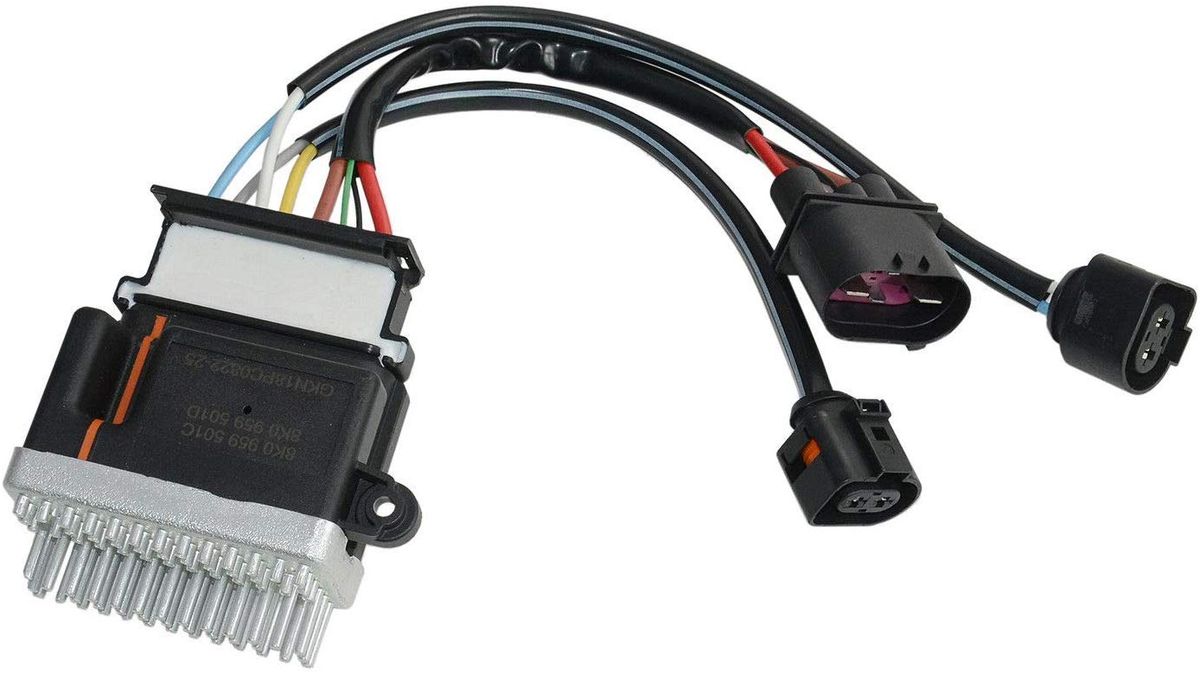
Connectors: The module has multiple electrical connectors, typically designed to interface with the vehicle's wiring harness. These connectors are usually blade-type terminals or multi-pin connectors, ensuring a secure and reliable electrical connection. The connectors are often labelled or colour-coded to prevent incorrect installation.
Functionality:
Signal Processing: The ignition module receives input signals from various sensors, most notably the crankshaft position sensor and the camshaft position sensor. These sensors provide information about the engine's rotational speed and position, which the module uses to determine the precise timing for firing the spark plugs.
Ignition Timing Control: Based on the signals received, the ignition module calculates the optimal timing to trigger the ignition coil, which in turn fires the spark plugs. This process is crucial for efficient combustion, engine performance, and fuel economy. The module adjusts the timing in real time to account for changes in engine load, speed, and operating conditions.
Switching the Ignition Coil: The ignition module acts as a switch, controlling the flow of electrical current to the ignition coil. When the module activates the coil, it creates a high-voltage spark that is sent to the spark plugs, igniting the air-fuel mixture in the engine's cylinders.
Diagnostics and Feedback: Modern ignition modules often have built-in diagnostic capabilities. If a malfunction occurs, the module can send error codes to the vehicle's engine control unit (ECU), which can then trigger a check engine light and store the codes for retrieval during diagnostics.
Performance Specifications:
Voltage Range: The ignition module is designed to operate within the vehicle's 12-volt electrical system, but it must also handle the high voltage generated by the ignition coil (up to 40,000 volts) without failure.
Temperature Resistance: Given its location in the engine compartment, the module is built to withstand high temperatures, often up to 125 C (257 F) or more, without degradation in performance.
Response Time: The module operates with extremely fast response times, often in microseconds, to ensure precise control of ignition timing, especially at high engine speeds.
Durability: The module is designed for long-term reliability, withstanding continuous use and exposure to the harsh conditions of the engine environment.
Installation and Compatibility:
Mounting: The ignition module is usually mounted on or near the engine, often on the distributor housing, intake manifold, or a dedicated bracket. It is secured using bolts or screws and may be positioned to maximize cooling airflow or contact with a heat sink to dissipate heat.
Wiring Connections: Installation involves connecting the module to the vehicle's wiring harness, which includes inputs from the crankshaft and camshaft sensors, and outputs to the ignition coil. Proper installation is critical for correct operation, and the connectors are designed to prevent incorrect installation.
Compatibility: This ignition module is specifically designed for Toyota Y-Series engines, including those in the Venture and Cressida models. It is essential to use a module that matches the vehicle's specific engine type and configuration to ensure proper operation.
Applications:
Primary Use: The ignition module's primary function is to control the timing of the spark plugs, ensuring efficient combustion within the engine. This directly affects the vehicle's performance, fuel efficiency, and emissions.
Vehicle Application: It is used in Toyota Y-Series engines, which are found in models like the Venture and Cressida. These engines are known for their reliability and performance, and the ignition module plays a crucial role in maintaining these characteristics.
Advantages:
Precise Control: The module provides precise control over ignition timing, which is critical for optimal engine performance and efficiency.
Improved Fuel Efficiency: By optimizing ignition timing, the module helps improve fuel efficiency, reducing fuel consumption and emissions.
Enhanced Reliability: The module is designed for durability and long-term reliability, essential for the consistent performance of Toyota Y-Series engines.
Maintenance and Troubleshooting:
Signs of Failure: Symptoms of a failing ignition module may include engine misfires, difficulty starting, poor acceleration, and a decrease in fuel efficiency. In some cases, the engine may not start at all if the module fails.
Diagnostics: Modern ignition modules are often connected to the vehicle's onboard diagnostics system, which can help identify issues by generating specific error codes. These codes can be read with a diagnostic scanner, helping technicians pinpoint the cause of ignition-related problems.
Replacement: If the module fails, it is usually replaced as a whole unit. It is important to ensure that the replacement module is an exact match for the vehicle's engine specifications.
This ignition module is an essential component for the Toyota Y-Series Venture and Cressida models, playing a critical role in ensuring the engine runs smoothly, efficiently, and reliably.
What's in the box
1 x Ignition Module Toyota Y-Series Venture Cressida