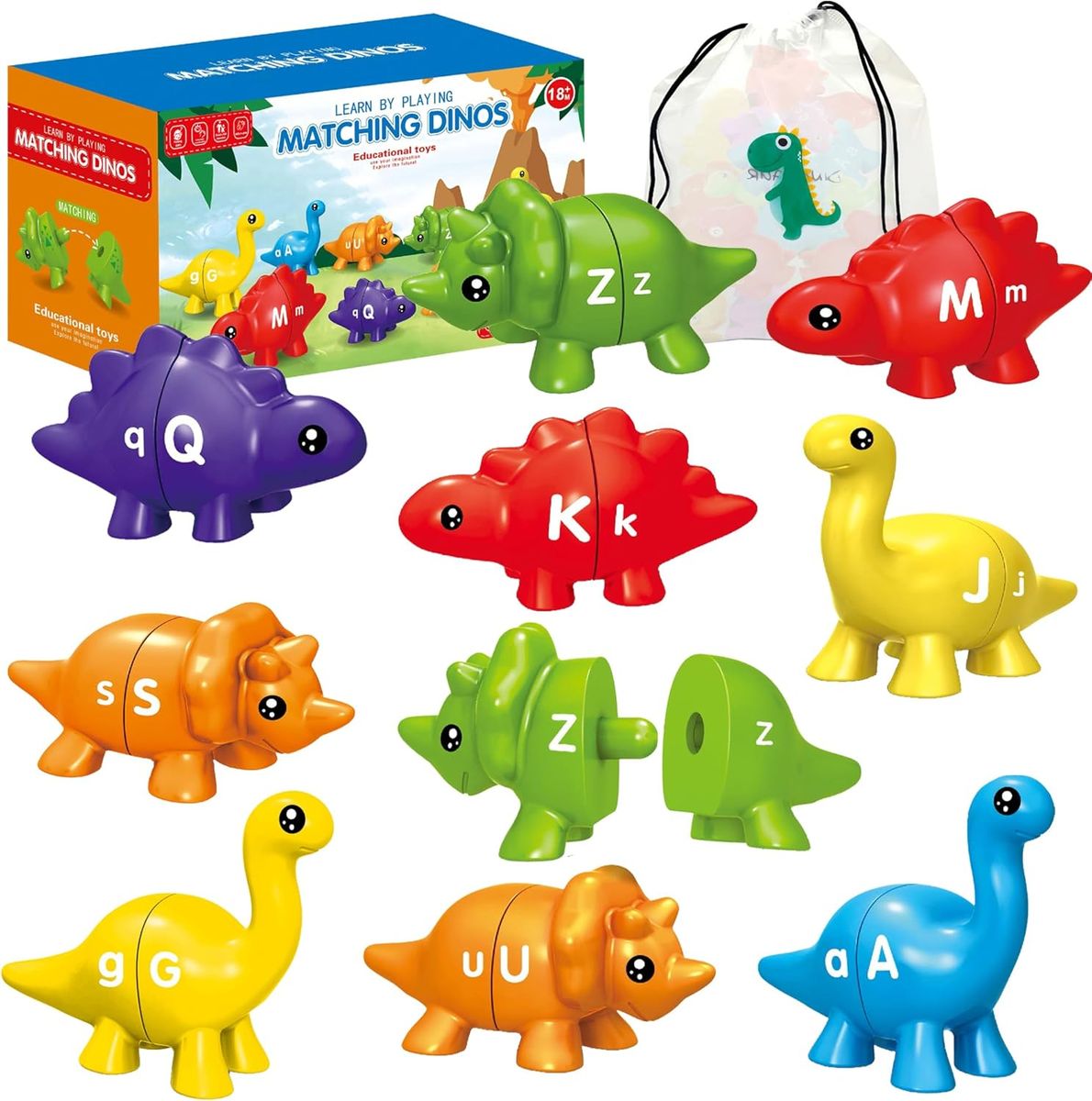
Kids Shape Matching Puzzle Educational Sorting Toy with Cards

Kids Shape Matching Puzzle Educational Sorting Toy with Cards

Colourful Early Learning Shape Sorter with Matching Cards for Preschool Play
No reviews yet
R 22.29
🚚 Ships in 18-20 work days

Colourful Early Learning Shape Sorter with Matching Cards for Preschool Play

🛡️
Warranty
6-Month Limited Warranty.
↩️
Return Policy
Hassle-Free Exchanges & Returns for 7 Days.

Product Information

SKU103044714
Stock StatusIn Stock
Safe Checkout

Interactive Shape Matching Activity for Early Learning
This colourful educational matching toy combines shape recognition, colour identification and hands-on puzzle play in one simple activity. Children can observe the different geometric shapes on the included matching cards and then search for the corresponding pieces on the board. The activity encourages young learners to look carefully, compare visual features and make their own matching decisions, creating an engaging introduction to basic shapes and colours through practical play.

Multiple Geometric Shapes for Recognition Practice
The set features a variety of familiar geometric forms including circles, squares, triangles and hexagonal shapes. Presenting different shapes together allows children to compare their outlines and gradually become more familiar with the visual differences between each form. Parents can also use the pieces during play to introduce basic shape names, turning ordinary matching time into an interactive early-learning activity that combines recognition, repetition and hands-on exploration.

Bright Multicolour Pieces Encourage Visual Engagement
The puzzle pieces are presented in bright colours including red, yellow, green and blue, helping make the activity visually appealing for young children. Colour differences can also be incorporated into matching games, allowing children to identify a piece not only according to its geometric shape but also by its colour. Parents can ask simple questions such as finding a red circle, green square or blue triangle to introduce additional challenges as children become more confident.

Matching Cards Add Structured Learning Challenges
Included reference cards provide children with visual patterns that can be used as matching challenges. Instead of playing with the pieces without direction, children can select a card, examine the displayed combination of colours and shapes, and then locate the corresponding pieces on the board. This card-based format gives the activity a clear objective while still allowing children to work at their own pace and repeat familiar challenges whenever they want additional practice.

Encourages Observation and Visual Comparison Skills
Successful matching requires children to carefully observe the reference card and compare its symbols with the available pieces. They need to notice details such as colour, shape and position before selecting a match. This repeated process encourages children to pay attention to visual differences and similarities rather than choosing pieces randomly, making the toy suitable for simple observation exercises during preschool and home-learning activities.

Supports Colour Recognition Through Hands-On Play
In addition to geometric learning, the colourful pieces provide opportunities to introduce and reinforce common colour names. Parents or caregivers can ask children to identify individual colours, group matching colours together or find a particular coloured shape shown on a card. Combining colour recognition with physical manipulation can make early learning more interactive and enjoyable than relying only on printed pictures or verbal exercises.

Hands-On Sorting Helps Develop Fine Motor Coordination
Children interact directly with the individual pieces by picking them up, holding them, positioning them and returning them to the appropriate locations. These repeated movements involve the hands and fingers and can support everyday fine motor practice during play. The activity also encourages more controlled movements because children need to align each selected piece with the corresponding position rather than simply placing objects randomly on the board.

Encourages Hand-Eye Coordination
The process of looking at a target position and then guiding a piece toward the correct location creates a simple hand-eye coordination activity. Children visually identify where a shape belongs and then use their hands to position it accordingly. Repeating the activity with different shapes provides ongoing opportunities for controlled placement while keeping the learning experience playful and accessible for young users.

Promotes Basic Logical Thinking and Problem Solving
When several shapes and colours are available at the same time, children need to determine which piece matches the example they are trying to find. If the first choice is incorrect, they can compare it again and try another option. This simple process of observing, selecting, checking and correcting introduces basic problem-solving behaviour in a child-friendly format without making the activity feel like a formal lesson.

Cute Bear-Shaped Board Makes Learning More Appealing
The main sorting board features a playful bear-inspired outline that gives the educational toy a friendly appearance. Rather than using a plain rectangular learning board, the animal-themed design adds a decorative element that fits naturally into a child's play area or educational toy collection. The combination of the brown board and brightly coloured geometric pieces creates an attractive contrast that makes individual shapes easy to distinguish.

Multiple Matching Possibilities for Repeat Play
Because the board contains multiple combinations of shapes and colours, children can return to the activity repeatedly instead of completing only one fixed puzzle. Different cards can present different matching challenges, and parents can also create simple verbal games without using the cards. For example, children can be asked to locate all circles, identify every yellow piece or find a specific combination such as a green hexagon.

Useful for Parent-and-Child Learning Activities
The matching toy can be used as an interactive activity between children and parents, caregivers or teachers. Adults can name a shape and ask the child to find it, show a card and encourage matching, or ask simple questions about colours and differences between pieces. This flexible play style creates opportunities for conversation and guided learning while allowing adults to adjust the difficulty according to the child's familiarity with the activity.

Suitable for Independent Puzzle Play
Once children understand how the matching system works, they can explore the board and cards independently. They can select a reference card, search for corresponding shapes and check their choices visually. This makes the toy suitable for quieter play sessions at home where children can work through simple challenges at their own pace without requiring electronic devices, complicated instructions or continuous adult assistance.

Screen-Free Educational Entertainment
This matching toy provides a hands-on alternative to phones, tablets and other electronic entertainment. Children interact directly with physical shapes and printed cards, keeping attention focused on observation, matching and manipulation. No batteries, charging cables, applications or internet connection are required, making the activity easy to introduce during everyday playtime, preschool learning sessions or quiet indoor activities.

Learning Through Repetition and Familiarity
Young children often benefit from repeating the same basic concepts multiple times. The reusable matching pieces and cards make it easy to practise familiar shapes and colours again and again without requiring new materials for every session. As children become more confident, adults can gradually introduce additional instructions or combine shape and colour requirements to make familiar activities slightly more challenging.

Supports Early Vocabulary Development
The toy can also be incorporated into simple language activities. Parents can name colours and shapes while children locate them, encouraging children to associate spoken words with visible objects. Terms such as circle, square, triangle, red, blue, yellow and green can naturally become part of the activity. Adults can also ask simple descriptive questions, helping transform puzzle time into an opportunity for conversational learning.

Flexible Play Beyond the Included Matching Cards
Children do not need to follow the cards during every play session. The colourful pieces can also be used for simple sorting, identification and memory-style activities created by parents. Children can search by colour, group similar shapes, compare different pieces or respond to verbal instructions. This flexibility extends the usefulness of the toy beyond one specific matching method and allows activities to change as the child becomes more familiar with the pieces.

Encourages Focus and Task Completion
Following a reference card gives children a specific goal to work toward. They need to examine the pattern, search among the available pieces and continue until the matching activity is complete. Because each step is relatively simple and visually clear, the toy provides an approachable way to practise staying engaged with a task while receiving the satisfaction of finding the correct matches.

Suitable for Preschool and Home Learning Environments
The combination of colours, geometric shapes, matching cards and hands-on pieces makes this toy suitable for a variety of early-learning settings. It can be used at home as part of everyday play, added to a preschool activity area or incorporated into simple shape and colour lessons. The activity can be adapted depending on whether the focus is recognition, sorting, matching, vocabulary or fine motor practice.

Simple Game Rules Make It Easy to Introduce
The basic matching concept is straightforward: observe a shape or pattern and locate the corresponding piece. This makes the toy easy for adults to demonstrate and allows children to begin exploring without complicated game rules. More challenges can be added gradually, such as asking for a particular combination of colour and shape, helping the activity remain approachable while still providing room for progression.

Colour and Shape Combination Creates Additional Challenges
A child may recognise a circle correctly but still need to determine which coloured circle matches the reference. Combining two visual characteristics creates a more detailed matching task than identifying only one feature at a time. This allows parents to begin with simple shape recognition and later introduce colour-and-shape combinations as the child becomes more comfortable with the basic activity.

Reusable Design for Everyday Learning Sessions
The board, pieces and cards can be used repeatedly, making the set suitable for regular learning-through-play sessions. Children can practise for a short period, return the components after play and revisit the activity another day with a different card or challenge. The reusable format provides a practical addition to a collection of educational toys without requiring consumable worksheets or disposable learning materials.

Engaging Gift Idea for Young Learners
With its bright colours, geometric pieces, matching cards and cute bear-shaped board, the set makes an appealing educational gift for children who enjoy sorting and puzzle activities. It combines playful visual design with several early-learning concepts in one set, making it suitable for birthdays, holidays and other gifting occasions where parents may prefer an interactive toy with both entertainment and educational value.

A Practical Combination of Learning and Play
Rather than focusing on only one activity, this educational toy brings together shape recognition, colour identification, visual matching, sorting, fine motor interaction and basic problem solving. Children can enjoy the pieces as a colourful puzzle while parents can use the same set to introduce simple educational concepts. This combination makes it a versatile early-learning toy suitable for repeated use as children become increasingly familiar with colours and geometric shapes.

What's in the box
1 x Kids Shape Matching Puzzle Set with Matching Cards

Interactive Shape Matching Activity for Early Learning
This colourful educational matching toy combines shape recognition, colour identification and hands-on puzzle play in one simple activity. Children can observe the different geometric shapes on the included matching cards and then search for the corresponding pieces on the board. The activity encourages young learners to look carefully, compare visual features and make their own matching decisions, creating an engaging introduction to basic shapes and colours through practical play.

Multiple Geometric Shapes for Recognition Practice
The set features a variety of familiar geometric forms including circles, squares, triangles and hexagonal shapes. Presenting different shapes together allows children to compare their outlines and gradually become more familiar with the visual differences between each form. Parents can also use the pieces during play to introduce basic shape names, turning ordinary matching time into an interactive early-learning activity that combines recognition, repetition and hands-on exploration.

Bright Multicolour Pieces Encourage Visual Engagement
The puzzle pieces are presented in bright colours including red, yellow, green and blue, helping make the activity visually appealing for young children. Colour differences can also be incorporated into matching games, allowing children to identify a piece not only according to its geometric shape but also by its colour. Parents can ask simple questions such as finding a red circle, green square or blue triangle to introduce additional challenges as children become more confident.

Matching Cards Add Structured Learning Challenges
Included reference cards provide children with visual patterns that can be used as matching challenges. Instead of playing with the pieces without direction, children can select a card, examine the displayed combination of colours and shapes, and then locate the corresponding pieces on the board. This card-based format gives the activity a clear objective while still allowing children to work at their own pace and repeat familiar challenges whenever they want additional practice.

Encourages Observation and Visual Comparison Skills
Successful matching requires children to carefully observe the reference card and compare its symbols with the available pieces. They need to notice details such as colour, shape and position before selecting a match. This repeated process encourages children to pay attention to visual differences and similarities rather than choosing pieces randomly, making the toy suitable for simple observation exercises during preschool and home-learning activities.

Supports Colour Recognition Through Hands-On Play
In addition to geometric learning, the colourful pieces provide opportunities to introduce and reinforce common colour names. Parents or caregivers can ask children to identify individual colours, group matching colours together or find a particular coloured shape shown on a card. Combining colour recognition with physical manipulation can make early learning more interactive and enjoyable than relying only on printed pictures or verbal exercises.

Hands-On Sorting Helps Develop Fine Motor Coordination
Children interact directly with the individual pieces by picking them up, holding them, positioning them and returning them to the appropriate locations. These repeated movements involve the hands and fingers and can support everyday fine motor practice during play. The activity also encourages more controlled movements because children need to align each selected piece with the corresponding position rather than simply placing objects randomly on the board.

Encourages Hand-Eye Coordination
The process of looking at a target position and then guiding a piece toward the correct location creates a simple hand-eye coordination activity. Children visually identify where a shape belongs and then use their hands to position it accordingly. Repeating the activity with different shapes provides ongoing opportunities for controlled placement while keeping the learning experience playful and accessible for young users.

Promotes Basic Logical Thinking and Problem Solving
When several shapes and colours are available at the same time, children need to determine which piece matches the example they are trying to find. If the first choice is incorrect, they can compare it again and try another option. This simple process of observing, selecting, checking and correcting introduces basic problem-solving behaviour in a child-friendly format without making the activity feel like a formal lesson.

Cute Bear-Shaped Board Makes Learning More Appealing
The main sorting board features a playful bear-inspired outline that gives the educational toy a friendly appearance. Rather than using a plain rectangular learning board, the animal-themed design adds a decorative element that fits naturally into a child's play area or educational toy collection. The combination of the brown board and brightly coloured geometric pieces creates an attractive contrast that makes individual shapes easy to distinguish.

Multiple Matching Possibilities for Repeat Play
Because the board contains multiple combinations of shapes and colours, children can return to the activity repeatedly instead of completing only one fixed puzzle. Different cards can present different matching challenges, and parents can also create simple verbal games without using the cards. For example, children can be asked to locate all circles, identify every yellow piece or find a specific combination such as a green hexagon.

Useful for Parent-and-Child Learning Activities
The matching toy can be used as an interactive activity between children and parents, caregivers or teachers. Adults can name a shape and ask the child to find it, show a card and encourage matching, or ask simple questions about colours and differences between pieces. This flexible play style creates opportunities for conversation and guided learning while allowing adults to adjust the difficulty according to the child's familiarity with the activity.

Suitable for Independent Puzzle Play
Once children understand how the matching system works, they can explore the board and cards independently. They can select a reference card, search for corresponding shapes and check their choices visually. This makes the toy suitable for quieter play sessions at home where children can work through simple challenges at their own pace without requiring electronic devices, complicated instructions or continuous adult assistance.

Screen-Free Educational Entertainment
This matching toy provides a hands-on alternative to phones, tablets and other electronic entertainment. Children interact directly with physical shapes and printed cards, keeping attention focused on observation, matching and manipulation. No batteries, charging cables, applications or internet connection are required, making the activity easy to introduce during everyday playtime, preschool learning sessions or quiet indoor activities.

Learning Through Repetition and Familiarity
Young children often benefit from repeating the same basic concepts multiple times. The reusable matching pieces and cards make it easy to practise familiar shapes and colours again and again without requiring new materials for every session. As children become more confident, adults can gradually introduce additional instructions or combine shape and colour requirements to make familiar activities slightly more challenging.

Supports Early Vocabulary Development
The toy can also be incorporated into simple language activities. Parents can name colours and shapes while children locate them, encouraging children to associate spoken words with visible objects. Terms such as circle, square, triangle, red, blue, yellow and green can naturally become part of the activity. Adults can also ask simple descriptive questions, helping transform puzzle time into an opportunity for conversational learning.

Flexible Play Beyond the Included Matching Cards
Children do not need to follow the cards during every play session. The colourful pieces can also be used for simple sorting, identification and memory-style activities created by parents. Children can search by colour, group similar shapes, compare different pieces or respond to verbal instructions. This flexibility extends the usefulness of the toy beyond one specific matching method and allows activities to change as the child becomes more familiar with the pieces.

Encourages Focus and Task Completion
Following a reference card gives children a specific goal to work toward. They need to examine the pattern, search among the available pieces and continue until the matching activity is complete. Because each step is relatively simple and visually clear, the toy provides an approachable way to practise staying engaged with a task while receiving the satisfaction of finding the correct matches.

Suitable for Preschool and Home Learning Environments
The combination of colours, geometric shapes, matching cards and hands-on pieces makes this toy suitable for a variety of early-learning settings. It can be used at home as part of everyday play, added to a preschool activity area or incorporated into simple shape and colour lessons. The activity can be adapted depending on whether the focus is recognition, sorting, matching, vocabulary or fine motor practice.

Simple Game Rules Make It Easy to Introduce
The basic matching concept is straightforward: observe a shape or pattern and locate the corresponding piece. This makes the toy easy for adults to demonstrate and allows children to begin exploring without complicated game rules. More challenges can be added gradually, such as asking for a particular combination of colour and shape, helping the activity remain approachable while still providing room for progression.

Colour and Shape Combination Creates Additional Challenges
A child may recognise a circle correctly but still need to determine which coloured circle matches the reference. Combining two visual characteristics creates a more detailed matching task than identifying only one feature at a time. This allows parents to begin with simple shape recognition and later introduce colour-and-shape combinations as the child becomes more comfortable with the basic activity.

Reusable Design for Everyday Learning Sessions
The board, pieces and cards can be used repeatedly, making the set suitable for regular learning-through-play sessions. Children can practise for a short period, return the components after play and revisit the activity another day with a different card or challenge. The reusable format provides a practical addition to a collection of educational toys without requiring consumable worksheets or disposable learning materials.

Engaging Gift Idea for Young Learners
With its bright colours, geometric pieces, matching cards and cute bear-shaped board, the set makes an appealing educational gift for children who enjoy sorting and puzzle activities. It combines playful visual design with several early-learning concepts in one set, making it suitable for birthdays, holidays and other gifting occasions where parents may prefer an interactive toy with both entertainment and educational value.

A Practical Combination of Learning and Play
Rather than focusing on only one activity, this educational toy brings together shape recognition, colour identification, visual matching, sorting, fine motor interaction and basic problem solving. Children can enjoy the pieces as a colourful puzzle while parents can use the same set to introduce simple educational concepts. This combination makes it a versatile early-learning toy suitable for repeated use as children become increasingly familiar with colours and geometric shapes.

What's in the box
1 x Kids Shape Matching Puzzle Set with Matching Cards

More in Matching